Choosing the right wholesale order size is an important purchasing decision for retailers, e-commerce businesses and distributors.
Ordering too much of an untested product can tie up capital and create excess stock. Ordering too little of a proven bestseller, on the other hand, can increase transport costs per unit and lead to frequent stock shortages.
The right approach is therefore not simply to place the largest possible order. It is to match the order size to the product, expected demand, available storage space and stage of your business.
For some companies, this means starting with several mixed cartons. Others may need mixed pallets, full pallets or complete truckloads.
Understanding the differences can help you build a more efficient wholesale purchasing strategy.
The Main Types of Wholesale Orders
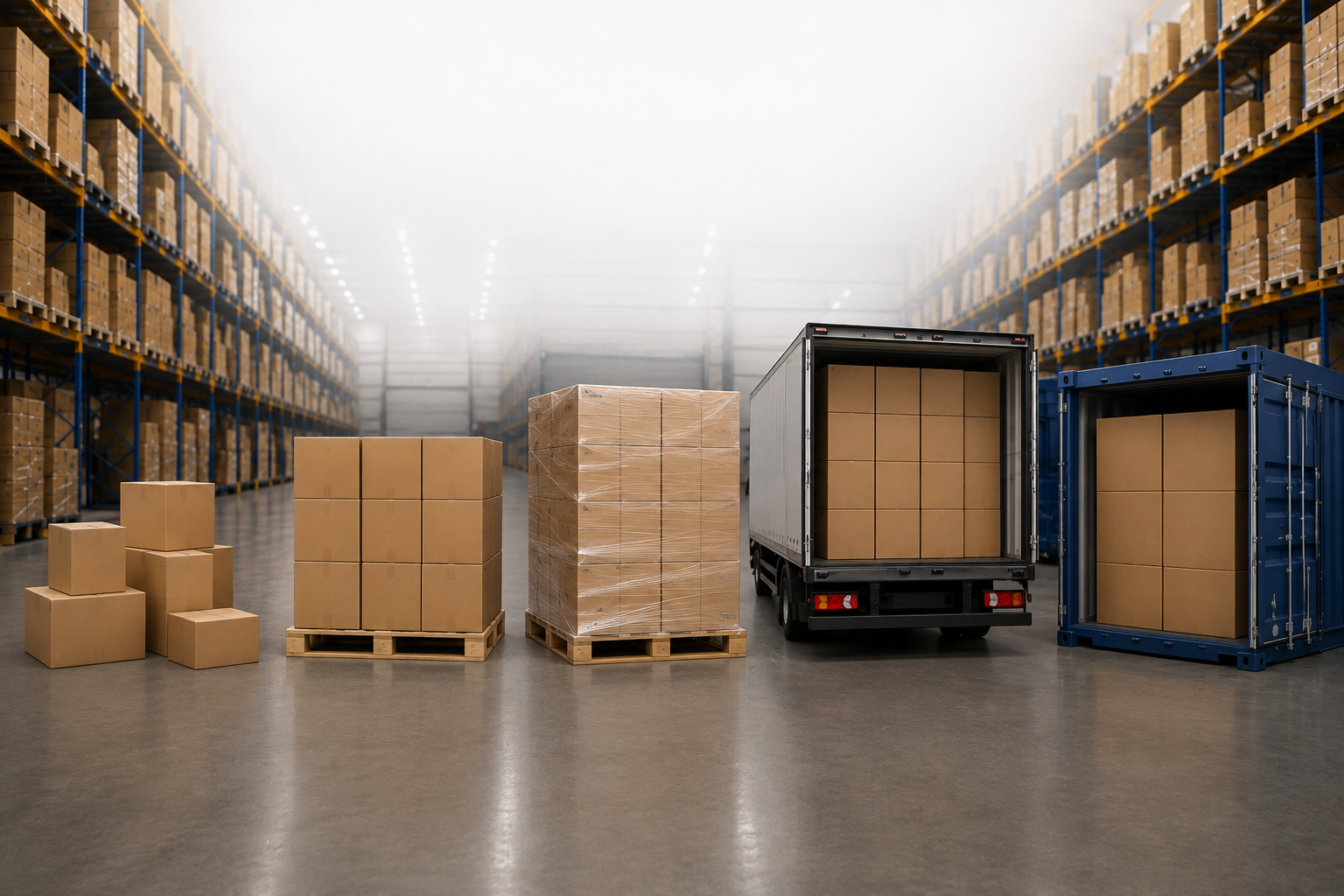
Wholesale orders can generally be divided according to their size and how products are combined.
| Order type | Best suited for |
|---|---|
| Mixed cartons | Testing new products |
| Mixed pallet | Expanding an existing assortment |
| Full pallet | Replenishing proven products |
| Truckload | Distributors and retail chains |
| Container cooperation | Large-volume or individual sourcing |
There is no single option that is best for every company. In many cases, businesses use several of these purchasing models simultaneously depending on the product category.
1. Mixed Cartons – A Practical Way to Test New Products
Mixed carton orders are particularly useful when a retailer wants to introduce new products without immediately investing heavily in stock.
Instead of purchasing a large quantity of one SKU, the buyer can build an order containing smaller quantities across different products.
For example, an online retailer expanding into new categories could test:
- cordless DIY tools,
- small kitchen appliances,
- garden equipment,
- electronics,
- cleaning products.
This approach spreads purchasing risk across several products.
After observing actual customer demand, the retailer can identify which products deserve larger replenishment orders.
When do mixed cartons make sense?
They are especially useful for: new online stores, marketplace sellers, independent retailers, seasonal product testing and businesses entering an unfamiliar product category.
The main advantage is flexibility.
The disadvantage is that transport and handling costs per unit can sometimes be higher than with larger consolidated orders.
2. Mixed Pallets – When You Need More Stock but Still Want Variety
Once a business has a better understanding of its customers, a mixed pallet can become a more efficient purchasing option.
A mixed pallet combines different products or SKUs within one larger shipment.
For example, a home and garden retailer could combine quantities of:
garden tools + cleaning equipment + home appliances + electronics
within the same wholesale purchase.
This allows the retailer to increase inventory while avoiding the need to purchase a full pallet of every individual product.
Mixed pallets can therefore be particularly useful for businesses with a broad assortment but moderate demand per SKU.
They can also help consolidate transportation compared with placing several smaller orders separately.
3. Full Pallets – Better for Products With Proven Demand
Once a product has demonstrated consistent sales, purchasing larger quantities becomes easier to justify.
A full pallet is generally more suitable when the retailer already knows:
- how quickly the product sells,
- what margin it generates,
- how seasonal the demand is,
- how much warehouse capacity is available,
- when the next replenishment will be required.
For example, if a retailer has already tested a particular cordless tool and sells it consistently every week, continuing to purchase only a few cartons may no longer be the most efficient approach.
Moving to a full pallet can simplify replenishment and potentially improve the overall logistics cost per unit.
However, larger quantities should normally be based on real sales data rather than assumptions about future demand.
4. Truckloads – For High-Volume Retail and Distribution
Truckload orders are typically relevant for larger retailers, distributors, retail chains and high-volume e-commerce operations.
At this stage, purchasing decisions are usually based on established demand and inventory planning.
A truckload may contain a large quantity of one successful product or multiple products prepared as part of a larger wholesale order.
This model can make sense when: sales volumes are predictable, products need to be distributed between several locations, regular replenishment is required, or the buyer is supplying other retailers.
For larger wholesale orders, logistics become just as important as product price.
Buyers should consider not only the purchase cost but also pallet configuration, transport efficiency, delivery schedule and warehouse capacity.
5. Container Cooperation – For Large-Volume and Individual Sourcing
For businesses operating at significantly higher volumes, direct container cooperation can become another option.
This model is different from purchasing products already available in a European wholesale warehouse.
It may involve sourcing products specifically for the customer, larger production quantities, individual product requirements or planned long-term supply.
Container purchasing can provide attractive opportunities, but it also introduces additional complexity.
Buyers need to consider production schedules, international transportation, customs procedures, documentation, product compliance, quality control and significantly longer planning cycles.
For this reason, container cooperation is generally more appropriate for businesses with established purchasing volumes and predictable demand.
Small Orders and Large Orders Serve Different Purposes
It is a mistake to assume that larger wholesale orders are always better.
The most efficient purchasing strategy often changes as a product develops within a retailer’s assortment.
A typical progression could look like this:
Test several products → identify successful SKUs → increase quantities → consolidate into pallets → move proven products into regular high-volume purchasing.
This approach allows retailers to use actual sales information when making larger purchasing decisions.
A product that performs well can gradually receive more inventory investment, while unsuccessful products can be discontinued without leaving the retailer with excessive stock.
How to Decide Which Wholesale Order Is Right for You
Before increasing order volume, consider four important questions:
Is the product already proven?
New products normally justify more cautious quantities than established bestsellers.
How quickly will the inventory sell?
Calculate expected stock coverage rather than simply purchasing the largest quantity available.
How much warehouse space do you have?
Attractive pricing is less useful if excessive stock creates storage problems.
What is the total landed cost?
Compare product price together with transportation and handling. Sometimes consolidating products into a larger shipment can reduce the effective logistics cost per unit.
The objective should be to find the best balance between stock availability, purchasing price, transportation efficiency and inventory risk.
How Adamanta Supports Different Wholesale Order Sizes
This flexible purchasing model is also how Adamanta works with B2B customers across Europe.
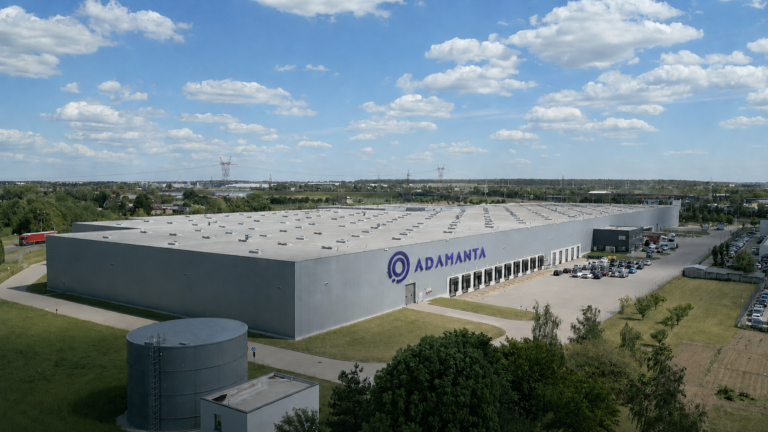
As a European importer and wholesale supplier based in Poland, Adamanta supplies retailers, e-commerce businesses, marketplace sellers, distributors and retail chains at different stages of growth.
Customers can build wholesale orders across multiple product categories, including DIY tools, electronics, home appliances, garden equipment, cleaning products, automotive accessories, lighting and seasonal products.
This makes it possible to begin with a diversified order rather than committing immediately to very large quantities of individual products.
As demand develops, customers can progress from smaller mixed orders to mixed pallets, full pallets and larger-volume orders.
For truckload and other high-volume requirements, customers can place their order or request through the website. The appropriate Adamanta department then contacts the customer regarding transportation, quantities and order arrangements.
For businesses requiring even larger volumes or individual sourcing, container cooperation can also provide an additional purchasing route.
From Product Testing to Regular Wholesale Supply
Consider a retailer that wants to introduce several new product categories.
The company may initially purchase:
- several cordless tools,
- selected garden products,
- small home appliances,
- several electronic gadgets.
Rather than making a major investment in one SKU, the retailer first tests actual customer response.
After several weeks, sales data may show that certain tools and appliances significantly outperform the other products.
The next purchase can then contain larger quantities of those successful SKUs.
Eventually, a proven product might progress from:
small test quantity → mixed pallet → full pallet → regular high-volume replenishment.
The purchasing model develops together with the retailer’s actual sales.
Wholesale Purchasing Should Be Flexible
Wholesale purchasing is not simply a choice between buying small quantities and buying in bulk.
A good purchasing strategy allows businesses to test, measure, replenish and scale.
Mixed cartons reduce the risk of introducing unfamiliar products. Mixed pallets allow retailers to expand their assortment efficiently. Full pallets support proven sellers. Truckloads provide efficient supply for larger businesses, while container cooperation can support significantly higher-volume or individual sourcing requirements.
The right order size is therefore the one that matches the current stage of your product and your business.
Build Your Next Wholesale Order With Adamanta
Adamanta gives European retailers and distributors the flexibility to start with diversified wholesale orders and increase purchasing volumes as their sales develop.
Explore our product categories, select products suitable for your market and build your wholesale order directly through our website.
For larger truckload, volume or individual requirements, submit your order or enquiry and the appropriate department will contact you regarding the next steps and transportation arrangements.
Explore Adamanta’s wholesale product range and build an order that fits your business.